Low Cost Small Retailers Import: Import Documentation Basics
Working through Low Cost Entry Vape for Small Retailers properly means answering a handful of unglamorous questions early. Do that and the rest of the order tends to run quietly. The sections below cover those questions in the order they matter.
Who Buys Low Cost Entry Vape for Small Retailers and Why
Demand for Low Cost Entry Vape for Small Retailers rarely comes from a single customer type. Some specialty tobacconists want steady replacement stock, others want something seasonal they can merchandise for six weeks. Those two buying patterns need different carton sizes and different delivery windows, so it is worth separating them when you plan.
The buyers behind Low Cost Entry Vape for Small Retailers orders are usually pragmatic. They care about whether the product sells through, whether it arrives intact, and whether the next shipment will match the last one. Everything else is secondary, which is why consistency beats novelty in most reorder conversations.
Negotiation Levers That Actually Work
The most reliable negotiation on Low Cost Entry Vape for Small Retailers is a calendar, not a threat. Show a supplier twelve months of predictable orders and you will get a better response than from any single large enquiry.
Decide before you negotiate what you actually want from Low Cost Entry Vape for Small Retailers — a lower unit price, better payment terms, or priority production. Chasing all three at once usually means getting none of them.
Volume commitments, predictable scheduling and fast payment are the three levers that genuinely move Low Cost Entry Vape for Small Retailers pricing. Asking for a discount without offering any of them rarely gets you further than the published price list.

Documentation Set You Should Request
Ask for a complete document set with Low Cost Entry Vape for Small Retailers: invoice, packing list, origin certificate, batch identification and any product-specific test reports. Requesting them during production is routine; requesting them after arrival is a problem.
Good documentation on Low Cost Entry Vape for Small Retailers tells you who made the goods, when, and to what specification. That matters for traceability if a batch is ever questioned, and it matters for your own stock rotation.
Minimum Order Quantities and Carton Planning
MOQ on Low Cost Entry Vape for Small Retailers is usually set by whatever makes a production run efficient, not by any fixed rule. If your requirement is below the standard minimum, ask whether a mixed carton or a shared production slot is possible instead of accepting a large surplus you cannot sell through.
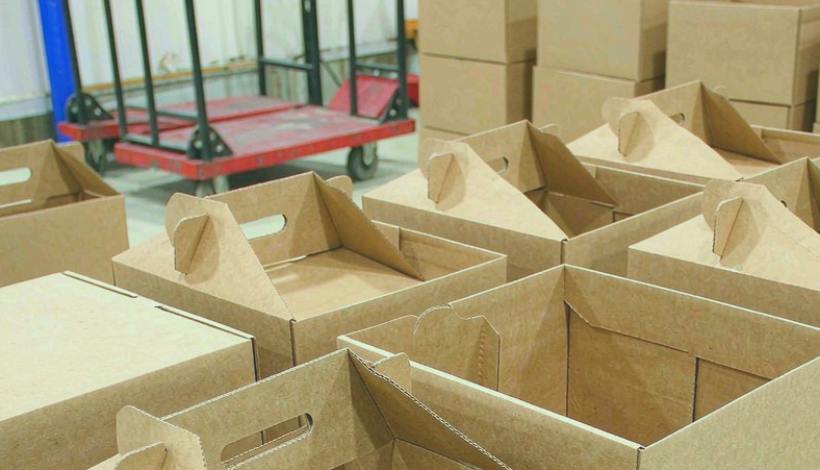
Carton planning decides whether Low Cost Entry Vape for Small Retailers arrives in a condition you can sell. Under-filled cartons deform in transit; over-filled ones split at the seams. Aim for a fill that leaves the carton rigid without compressing the product, and check the stacking height against your pallet pattern.
Plan Low Cost Entry Vape for Small Retailers cartons around how the goods will actually be handled: how many times they are transferred, what the last leg looks like, and whether the carton will be opened for inspection. Those answers matter more to damage rates than the carton grade on paper.
| Cost Component | Share of Landed Cost | Notes |
|---|---|---|
| Product cost | 12% of landed cost | Moves with volume and specification |
| Packaging | 21% of landed cost | Higher for retail-ready formats |
| Freight and handling | 2% of landed cost | Route and season dependent |
| Duty and clearance | Destination specific | Follows from classification |
Choosing Between Air, Sea and Express
For Low Cost Entry Vape for Small Retailers, the break-even between air and sea is mostly about how long your cash is tied up and how quickly the stock turns. Fast-moving lines can justify air; slow ones almost never can.
Sea freight suits planned Low Cost Entry Vape for Small Retailers volume, air suits genuine urgency, and express suits samples and small top-ups. Matching the mode to the reason, rather than to the deadline panic, is what keeps freight spend proportionate.
Building A Repeatable Replenishment Cycle
Scheduled replenishment for Low Cost Entry Vape for Small Retailers gives you leverage you do not get with ad-hoc orders. A supplier who can see your next four shipments will prioritise your production slot, and that priority is worth more than a small discount.
Most importers of Low Cost Entry Vape for Small Retailers who move to a fixed monthly cycle report the same benefit: fewer emergencies. The total volume ordered barely changes, but the number of urgent shipments drops sharply.
A repeatable cycle for Low Cost Entry Vape for Small Retailers has three inputs: weekly sell-through, lead time and buffer. Once those are written down, reordering becomes a routine task instead of a decision, and routine tasks are the ones that actually happen.
Risk Management for Large Shipments
The simplest risk control for Low Cost Entry Vape for Small Retailers is a documented paper trail: approved sample, written specification, inspection report and shipment photographs. When something does go wrong, that file is what turns a dispute into a claim.
Insurance on Low Cost Entry Vape for Small Retailers shipments is inexpensive relative to the exposure, particularly for sea freight where transit is long and handling points are numerous. Confirm what the policy covers and what it excludes before you rely on it.
- Request the full document set during production
- Split very large Low Cost Entry Vape for Small Retailers orders across production slots
- Track weekly sell-through to catch the seasonal turn
- Compare landed cost, not headline unit price
- Treat the first shipment as a test and the second as the real order
We keep the ordering process for Low Cost Entry Vape for Small Retailers deliberately simple: agree the specification, approve a sample, confirm the carton plan, then ship. If that sounds like the way you prefer to work, get in touch with your requirements.
Frequently asked questions
Can I get Low Cost Entry Vape for Small Retailers with my own branding?
Yes — private label is available on most Low Cost Entry Vape for Small Retailers lines. The usual options are printed logos, custom colourways and bespoke outer packaging. Each carries a different setup cost and minimum, which we list separately in the quotation.
How do you price Low Cost Entry Vape for Small Retailers compared with a trading company?
We quote from the production side, so product, packaging and logistics are listed separately rather than folded into one number. That makes comparison easier and usually shows where a competing quote has hidden its margin.
How long does a Low Cost Entry Vape for Small Retailers order take to arrive?
Production for Low Cost Entry Vape for Small Retailers commonly runs two to four weeks depending on specification and packaging, with transit added on top. Sea freight adds several weeks, air considerably less. We quote a realistic window rather than a best case.
What is the usual minimum order for Low Cost Entry Vape for Small Retailers?
Most Low Cost Entry Vape for Small Retailers production runs start at a carton-level minimum rather than a single unit. The exact figure depends on how many variants you need and whether the packaging is standard or custom printed, so it is worth asking with your actual mix in mind.
How is Low Cost Entry Vape for Small Retailers packed for export?
Packing depends on the product and route, but the principle is the same: inner protection, a rigid master carton and a pallet pattern that survives handling. We can send photographs of the packing method before dispatch.
Related reading
Talk to us about low cost entry vape for small retailers bulk
Send us your target quantity, destination and timing. We answer with real options and a landed cost you can compare — normally within one working day.