Certified Low Cost Small Retailers: Specifications that Matter
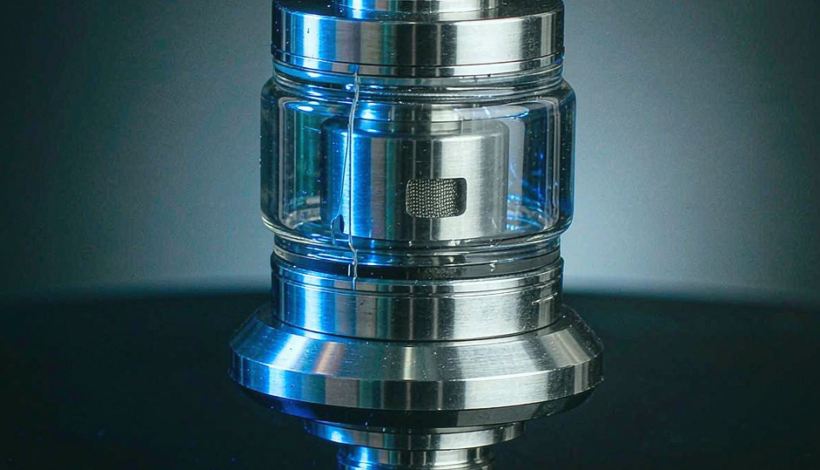
Low Cost Entry Vape for Small Retailers looks straightforward until you start comparing quotations. Then the variables appear: carton sizes, labelling rules, tolerances, freight terms. The notes below walk through them in the order a real order encounters them.
After-Sales, Warranty and Spare Parts
Clarify what happens after Low Cost Entry Vape for Small Retailers arrives. A written agreement on how defects are credited, how quickly claims are settled, and who pays for return freight is worth more than a friendly promise made during negotiation.
Spare parts availability is easy to overlook on Low Cost Entry Vape for Small Retailers and painful to discover later. Ask which components are stocked, how long they are supported, and what the minimum order is for a parts-only shipment.
Sample Orders and Evaluation Checklist
Evaluate Low Cost Entry Vape for Small Retailers samples the way your customer will use them, not the way they look on a desk. Check the packaging after a short transit, check the finish under retail lighting, and check consistency across several units rather than one.
A short evaluation checklist for Low Cost Entry Vape for Small Retailers keeps decisions comparable: specification match, finish quality, packaging integrity, documentation completeness and how the supplier handled the request. Score each one and the choice usually becomes obvious.
Order 2 samples of Low Cost Entry Vape for Small Retailers rather than one. Single units are hand-picked; a small batch shows you what the production line actually produces, and that is what you are about to buy in volume.

Margin Maths for Retailers
Margin on Low Cost Entry Vape for Small Retailers is decided at the purchase stage. Landed cost per sellable unit, not unit price, is the number that matters — and it includes freight, duty, shrinkage and the small percentage that never sells at full price.
A useful exercise with Low Cost Entry Vape for Small Retailers: calculate what a 15 percent improvement in landed cost does to annual profit, and compare that with what a 15 percent price increase does. The first is usually easier and does not risk volume.
Minimum Order Quantities and Carton Planning
Carton planning decides whether Low Cost Entry Vape for Small Retailers arrives in a condition you can sell. Under-filled cartons deform in transit; over-filled ones split at the seams. Aim for a fill that leaves the carton rigid without compressing the product, and check the stacking height against your pallet pattern.
Plan Low Cost Entry Vape for Small Retailers cartons around how the goods will actually be handled: how many times they are transferred, what the last leg looks like, and whether the carton will be opened for inspection. Those answers matter more to damage rates than the carton grade on paper.
MOQ on Low Cost Entry Vape for Small Retailers is usually set by whatever makes a production run efficient, not by any fixed rule. If your requirement is below the standard minimum, ask whether a mixed carton or a shared production slot is possible instead of accepting a large surplus you cannot sell through.
| Check Point | Method | Acceptance Criteria |
|---|---|---|
| Carton count | Physical count | Must match the packing list exactly |
| Appearance | Random sampling | Defect rate below the agreed threshold |
| Function check | Sampled units | Consistent with the approved sample |
| Packaging integrity | Drop and seal check | No deformation at arrival |
Common Mistakes Buyers Make
Skipping the carton check is a close second. Packaging failures on Low Cost Entry Vape for Small Retailers shipments rarely show up as a visible defect; they show up as scuffed retail units that will not sell at full price. Open a few cartons at random before signing off.
The most expensive mistake with Low Cost Entry Vape for Small Retailers is ordering the full quantity before evaluating a sample. Production samples, not showroom units, are what you will receive. Run the sample through the handling it will actually face and only then commit.
Choosing Between Air, Sea and Express
Ask your forwarder for the all-in door-to-door figure for Low Cost Entry Vape for Small Retailers rather than the port-to-port rate. The difference between the two numbers is usually where freight budgets quietly disappear.
For Low Cost Entry Vape for Small Retailers, the break-even between air and sea is mostly about how long your cash is tied up and how quickly the stock turns. Fast-moving lines can justify air; slow ones almost never can.
Sea freight suits planned Low Cost Entry Vape for Small Retailers volume, air suits genuine urgency, and express suits samples and small top-ups. Matching the mode to the reason, rather than to the deadline panic, is what keeps freight spend proportionate.
Shipping Routes, Transit Time and Freight Options
Freight quotes for Low Cost Entry Vape for Small Retailers move with fuel surcharges, currency and space availability. Ask whether the rate is fixed for a period or spot-quoted per shipment, because that single detail determines how predictable your landed cost will be over a year.
Transit time for Low Cost Entry Vape for Small Retailers depends far more on the route and the season than on the distance. Peak periods add days at both ends, and consolidations add handling. Build the realistic window into your reorder point rather than the best case the forwarder quotes.
- Ask which components are stocked as spares
- Plan cartons around real handling, not catalogue photos
- Track weekly sell-through to catch the seasonal turn
- Book inspection while there is still time to rework
- Treat the first shipment as a test and the second as the real order
We keep the ordering process for Low Cost Entry Vape for Small Retailers deliberately simple: agree the specification, approve a sample, confirm the carton plan, then ship. If that sounds like the way you prefer to work, get in touch with your requirements.
Frequently asked questions
What payment terms are available for Low Cost Entry Vape for Small Retailers?
Standard terms are a deposit with the balance before shipment, with alternatives available for established accounts on scheduled programmes. We will outline what is possible once we understand the size and frequency of your orders.
How do you price Low Cost Entry Vape for Small Retailers compared with a trading company?
We quote from the production side, so product, packaging and logistics are listed separately rather than folded into one number. That makes comparison easier and usually shows where a competing quote has hidden its margin.
How long does a Low Cost Entry Vape for Small Retailers order take to arrive?
Production for Low Cost Entry Vape for Small Retailers commonly runs two to four weeks depending on specification and packaging, with transit added on top. Sea freight adds several weeks, air considerably less. We quote a realistic window rather than a best case.
How do I know the Low Cost Entry Vape for Small Retailers I reorder will match the last batch?
We keep the approved specification and sample reference on file for every order and check against it at inspection. If a component changes, you hear about it before production rather than at delivery.
How is Low Cost Entry Vape for Small Retailers packed for export?
Packing depends on the product and route, but the principle is the same: inner protection, a rigid master carton and a pallet pattern that survives handling. We can send photographs of the packing method before dispatch.
Related reading
Talk to us about low cost entry vape for small retailers bulk
Send us your target quantity, destination and timing. We answer with real options and a landed cost you can compare — normally within one working day.