Budget-Friendly Low Cost Small Retailers: Carton Sizes for Importers

Most problems with Low Cost Entry Vape for Small Retailers are not product problems — they are specification, packaging or timing problems that were visible in advance. This page is a checklist for catching them while they are still cheap to fix.
Storage, Handling and Shelf Life
Warehouse conditions matter more for Low Cost Entry Vape for Small Retailers than most buyers assume. A few degrees of temperature difference over a summer changes how the product presents on the shelf. If you are storing through a hot season, plan for it rather than discovering it in returns.
Low Cost Entry Vape for Small Retailers degrades in predictable ways: heat, light and time. Store in a cool, dry place away from direct sunlight and rotate stock by production date. Those two habits prevent most of the quality complaints that get blamed on the factory.
OEM and Private Label Possibilities
If you are considering a private label version of Low Cost Entry Vape for Small Retailers, ask what the factory needs from you: artwork format, colour reference, quantity per variant and lead time for the first run. Clear inputs at the start quietly remove weeks from the schedule.
OEM work on Low Cost Entry Vape for Small Retailers is most cost-effective when you change what the factory can already do. A different colour, a printed logo or a reworked carton costs far less than a new mould, and it gets you a recognisable product much faster.
Private label on Low Cost Entry Vape for Small Retailers usually starts with artwork and ends with tooling. In between sit choices about colourways, packaging structure and minimum runs per variant. Understanding which of those carry a setup cost tells you how far you can differentiate without inflating the first order.
Quality Control Steps That Catch Problems Early
The most useful QC report for Low Cost Entry Vape for Small Retailers is a boring one: carton count, defect rate by category, photographs of the packing method, and a clear pass or fail. Narrative reports that hedge are far less useful than a simple count you can hold someone to.
Inspection works when it happens before shipment. A pre-shipment check on Low Cost Entry Vape for Small Retailers covering quantity, appearance, function and packaging typically takes a day and costs a fraction of a return. Book it early enough that a failed report still leaves time to rework.
Working with Agents Versus Direct Factories
Agents add value on Low Cost Entry Vape for Small Retailers when you need local follow-up, consolidation across factories or help with documentation. They add cost when all you need is a single product from a single line.
Going direct on Low Cost Entry Vape for Small Retailers works well once your specification is stable and your volume is predictable. Before that point, an agent's ability to chase a production slot is often worth the margin.
The honest test: ask whether the agent can tell you something about Low Cost Entry Vape for Small Retailers production that you could not learn from the factory's own quotation. If not, you are paying for an introduction.
| Specification | Typical Range | Why It Matters |
|---|---|---|
| Unit specification | 12–8 variant range | Defines what the factory must hold |
| Master carton | 5 units per carton | Drives freight cost per unit |
| Production lead time | 12–8 working days | Sets your reorder point |
| Inspection window | 5 day report turnaround | Must fit before vessel cut-off |
Shipping Routes, Transit Time and Freight Options
Choosing between sea, air and express for Low Cost Entry Vape for Small Retailers is a margin question, not a speed question. Sea freight protects unit economics on planned volume; air rescue shipments protect shelf availability. Most importers end up using both, and planning for that is cheaper than improvising.
Transit time for Low Cost Entry Vape for Small Retailers depends far more on the route and the season than on the distance. Peak periods add days at both ends, and consolidations add handling. Build the realistic window into your reorder point rather than the best case the forwarder quotes.
Minimum Order Quantities and Carton Planning
Plan Low Cost Entry Vape for Small Retailers cartons around how the goods will actually be handled: how many times they are transferred, what the last leg looks like, and whether the carton will be opened for inspection. Those answers matter more to damage rates than the carton grade on paper.
MOQ on Low Cost Entry Vape for Small Retailers is usually set by whatever makes a production run efficient, not by any fixed rule. If your requirement is below the standard minimum, ask whether a mixed carton or a shared production slot is possible instead of accepting a large surplus you cannot sell through.
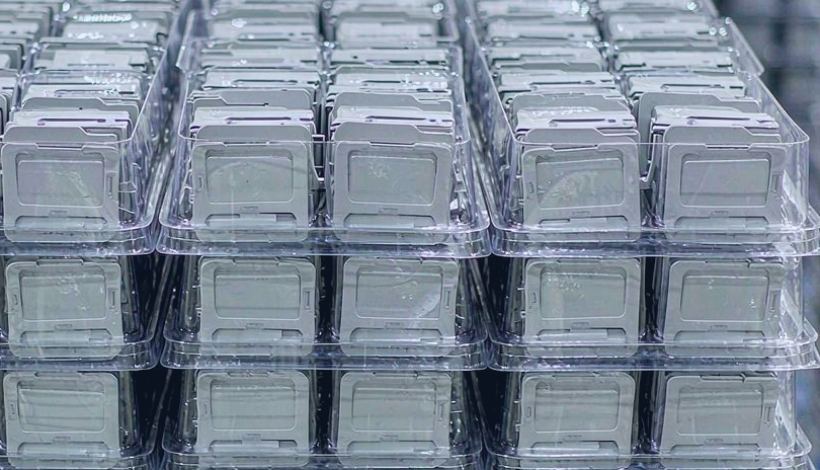
Carton planning decides whether Low Cost Entry Vape for Small Retailers arrives in a condition you can sell. Under-filled cartons deform in transit; over-filled ones split at the seams. Aim for a fill that leaves the carton rigid without compressing the product, and check the stacking height against your pallet pattern.
Margin Maths for Retailers
Margin on Low Cost Entry Vape for Small Retailers is decided at the purchase stage. Landed cost per sellable unit, not unit price, is the number that matters — and it includes freight, duty, shrinkage and the small percentage that never sells at full price.
Retailers who track Low Cost Entry Vape for Small Retailers by margin per shelf metre rather than margin per unit consistently make better range decisions. The product that earns slightly less per unit but turns twice as fast is usually the better use of the space.
- Agree the specification in writing before sampling Low Cost Entry Vape for Small Retailers
- Use one approved sample reference for every repeat order
- Track weekly sell-through to catch the seasonal turn
- Split very large Low Cost Entry Vape for Small Retailers orders across production slots
- Book inspection while there is still time to rework
If you want to move on Low Cost Entry Vape for Small Retailers, the fastest next step is a specification and a sample. Send us your target quantity and destination and we will come back with options, timings and a landed cost you can compare against what you have today.
Frequently asked questions
What payment terms are available for Low Cost Entry Vape for Small Retailers?
Standard terms are a deposit with the balance before shipment, with alternatives available for established accounts on scheduled programmes. We will outline what is possible once we understand the size and frequency of your orders.
What documentation comes with a Low Cost Entry Vape for Small Retailers shipment?
A standard shipment includes commercial invoice, packing list and certificate of origin, with product-specific declarations where the destination requires them. We prepare the set during production so it is ready before the goods arrive.
Can different variants of Low Cost Entry Vape for Small Retailers be mixed in one carton?
Mixed cartons are usually possible and are a good option when you are testing a range or working below a per-variant minimum. There is normally a small packing surcharge, which we will show on the quotation.
How do you price Low Cost Entry Vape for Small Retailers compared with a trading company?
We quote from the production side, so product, packaging and logistics are listed separately rather than folded into one number. That makes comparison easier and usually shows where a competing quote has hidden its margin.
How long does a Low Cost Entry Vape for Small Retailers order take to arrive?
Production for Low Cost Entry Vape for Small Retailers commonly runs two to four weeks depending on specification and packaging, with transit added on top. Sea freight adds several weeks, air considerably less. We quote a realistic window rather than a best case.
Related reading
Talk to us about low cost entry vape for small retailers bulk
Send us your target quantity, destination and timing. We answer with real options and a landed cost you can compare — normally within one working day.